Mold Inspection & Testing in McKinney
Spotted a dark patch, caught a musty smell, or had a leak that never quite dried out? You are probably asking, "Is this mold?" An inspection and test can answer that question with facts instead of guesses.
Designatedwashington Mold Help is a referral service. We do not inspect or test anything ourselves. We connect homeowners in McKinney and the McKinney area with independent local providers who do. You can compare what each one offers, ask questions, and choose your next step without pressure. Reaching a provider while the problem is still small often keeps the fix simpler too.
Think you have mold? Start here
You noticed something odd. Maybe a stain, maybe a smell. What now?
Take a breath. Many spots turn out to be dirt, soot, or harmless mildew. Others are real mold. You cannot tell by looking alone, and that is exactly why people search for mold inspection near me.
The goal is simple. Find out what it is, how far it goes, and why it started.
Is there a leak or damp spot right now?
If water is still getting in, that comes first. Mold needs moisture to grow. Shut off a leaking supply line if you can do so safely, and dry what you can reach.
Then reach out to a provider while the problem is still small. Catch it small and the next steps are usually easier to compare and decide on.
When does an inspection make sense?
Here are common reasons homeowners ask for one:
- A musty smell that comes back after cleaning
- Visible spots on walls, ceilings, or around windows
- A past roof leak, plumbing leak, or flooded room
- Allergy-like symptoms that seem worse at home
- Buying or selling a house
- Checking that earlier cleanup actually worked
If any of these sound familiar, an inspection is a reasonable next move.
Why does mold show up so often in our climate?
Hot, humid summers keep indoor air heavy. Heavy downpours and tropical storm season push water toward roofs, walls, and foundations. Attics get very hot, and warm damp air can collect under the roof deck.
Slab-on-grade ranch homes can hide moisture in walls and flooring. Older pier-and-beam houses may have damp crawl spaces. A local provider knows these patterns and where to look.
What happens during a mold inspection?
The visit is usually calmer than people expect. The provider starts with questions about leaks, smells, and where you have seen growth.
Then comes a walk-through. Many providers check:
- Ceilings, walls, and baseboards
- Attic spaces and roof penetrations
- Crawl spaces or the slab edge
- Bathrooms, kitchens, and laundry areas
- Around the air handler and ducts
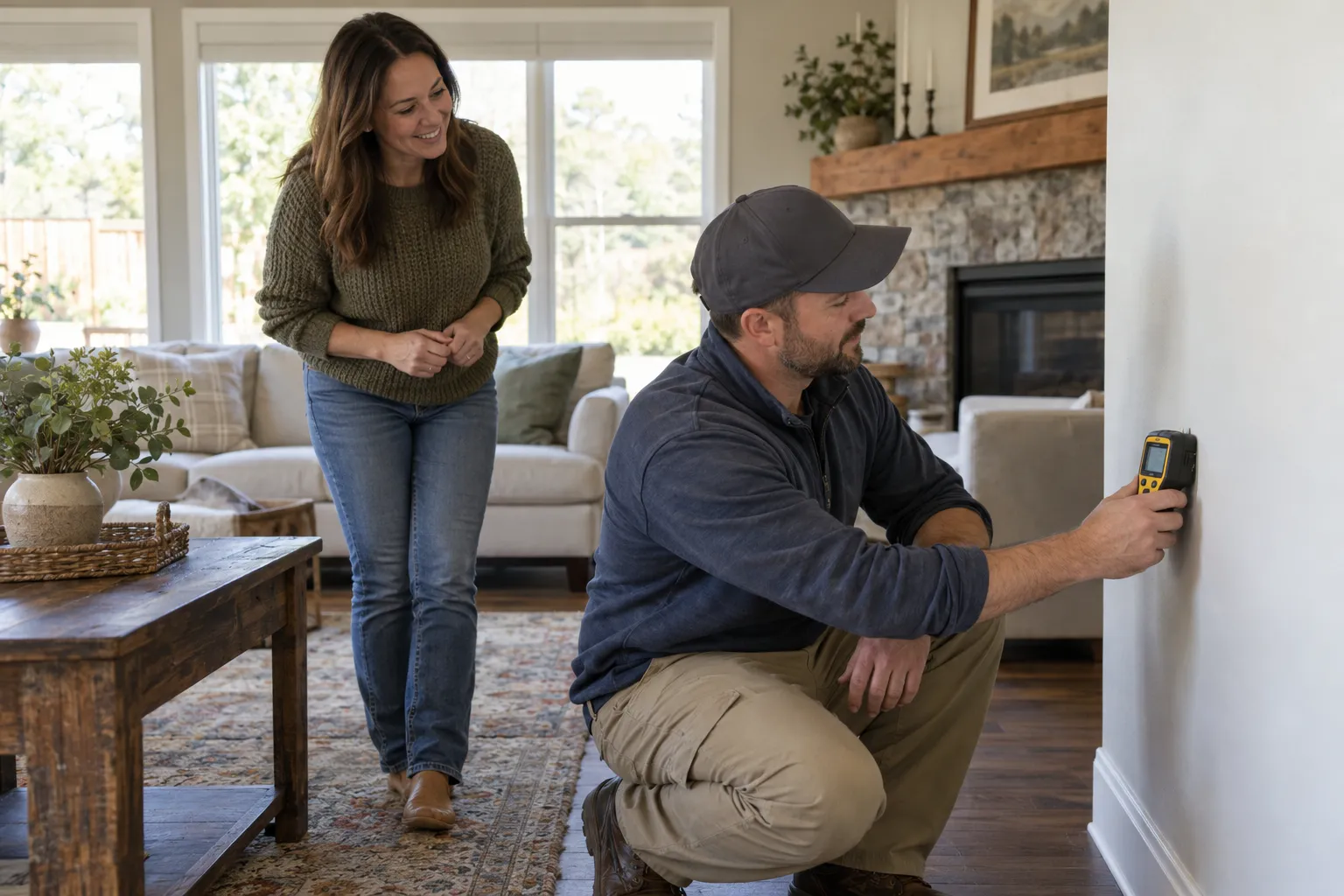
They often use a moisture meter, and some use a thermal camera to spot cool, damp areas behind surfaces.
Do I need testing, or is looking enough?
Good question. Sometimes a visual inspection and moisture readings tell the story. Testing adds detail, like which types of mold are present and how much is in the air.
A provider may suggest testing when growth is hidden, when you want a baseline, or when you need documents for a sale or a claim. Ask them why they recommend it.
What are the types of mold testing?
Three kinds come up most:
- Air samples compare indoor air with outdoor air.
- Surface samples use a swab or tape on a suspect spot.
- Bulk samples take a small piece of material for the lab.
Samples go to a lab, and the lab writes the report. If you want certified mold testing, ask the provider what credentials they hold and which lab they use. Then check those details yourself.
How do I read my results?
Results can look like a wall of long names. Ask the provider to walk you through them in plain words.
A good report shows where samples were taken, what was found, and how it compares with outdoor air. It should also point to the likely moisture source. Mold levels alone do not tell the whole story. The cause matters just as much.
Some mold types get a scary reputation, including the one people call black mold. A lab result, not color, tells you what you have.
Should inspection and remediation be separate or together?
This is a real decision, so compare, then decide.
Some providers do both. That can feel simple. Others only inspect, which gives you an outside opinion before anyone quotes removal work. Neither is wrong.
If you want an unbiased view, you can have one provider inspect and then collect written estimates from others for residential mold removal. If you choose one provider for both, ask for the findings in writing first.
How do I prepare for the visit?
A little prep makes the visit smoother:
- Write down where you saw or smelled something
- Note dates of any leaks, storms, or repairs
- Keep the area as it is, so nothing gets wiped away
- Clear a path to the attic, panel, and air handler
- Gather old reports or repair receipts
You do not need to scrub or bleach anything first. Cleaning can hide clues.
What should I ask the provider?
Ask before you commit. A few questions to try:
- What will you inspect, and for how long?
- Which tests do you recommend, and why?
- Which lab handles the samples?
- Will I get a written report?
- What is the total price, including lab fees?
- Do you also offer removal, and how do you keep that separate?
If an answer is vague, that tells you something.
What if the inspection finds mold?
Don't panic. Finding it is progress. The report gives you a map, and you can use it to gather written estimates for removal from more than one provider.
If a claim is on your mind, some policies may cover sudden damage, so check your policy. Providers can often help document damage for a claim.
What if it comes back clean?
That is useful too. You can stop worrying about that spot, and you may still learn about damp areas worth watching. A clean result is a good reason to fix any small leak before it grows.
How does Designatedwashington Mold Help fit in?
Designatedwashington Mold Help does not inspect, test, or remove mold. It connects you with independent providers in the McKinney area so you spend less time searching. Request a callback to check provider availability, or send a request and compare your options without obligation.
What's Included
Visual Inspection
A provider walks the home, checks likely damp spots, and notes visible growth and moisture clues.
Moisture Readings Included
Meters and sometimes thermal cameras help find damp areas hiding behind walls, ceilings, and floors.
Air and Surface Sampling
Samples are taken when needed and sent to a lab for analysis.
Written Report
Findings, lab results, and likely moisture sources are explained so you can compare next steps clearly.
What does mold testing typically cost?
Prices vary by home size, number of samples, and the lab used. These are typical U.S. ranges only. Ask each provider for a written quote that lists every fee before you agree.
| Item | Typical range | Notes |
|---|---|---|
| Basic visual inspection | $200 – $500 | Often smaller homes or one problem area |
| Full-home inspection with moisture readings | $300 – $800 | Larger homes cost more |
| Air sample (each) | $50 – $150 | Usually includes an outdoor comparison sample |
| Surface or tape sample (each) | $30 – $100 | Used on visible spots |
| Thermal imaging add-on | $100 – $400 | Helps locate hidden moisture |
| Post-cleanup clearance test | $250 – $600 | Checks that removal worked |
How It Works
Share Your Concern
Tell us about the stain, smell, or past leak so the request fits your situation.
Get Connected
Reach an independent local provider who handles inspection and testing.
Compare Written Estimates
Ask questions, review the scope and fees, and weigh your choices without pressure.
Choose and Schedule Your Visit
Pick the provider you like and set a time that works for you.
Why Call Designatedwashington Mold Help
Compare Options
Reach more than one independent provider, review written quotes side by side, and choose what fits your home.
Less Searching
One simple step connects you with local providers instead of endless scrolling.
No Pressure
Requesting an estimate carries no obligation, so you can decide at your pace.
Local Know-How
Providers in the network understand humid summers, storm leaks, and hot attics.
Other Services
Need mold inspection & testing services in McKinney?
Questions about a musty smell or dark spots? Reach out and we will point you to independent local mold providers in the McKinney area. No obligation.
No obligationMold Inspection & Testing Services FAQ
How much does a mold inspection cost?
Many U.S. inspections fall between $300 and $800, with lab samples often added on top. Home size and the number of samples matter most. Request a written quote from each provider so you can compare the full price.
Can I test for mold myself with a kit?
Store kits can show that mold spores exist, but spores are in most homes. They do not find the source or the extent. A provider's inspection gives you much more useful information.
Does a mold inspection come with removal?
Not always. Some providers inspect only, while others do both. Ask how the work is separated, and get the findings in writing before you request removal estimates. Comparing a few providers helps you decide.
Request a callback
Questions about a musty smell or dark spots? Reach out and we will point you to independent local mold providers in the McKinney area. No obligation.
No obligation